HealFern may earn a commission if you buy through links on this page, at no extra cost to you. That does not change what we report.
Part of our Slim Boost Tea overview. Last checked October 27, 2026.
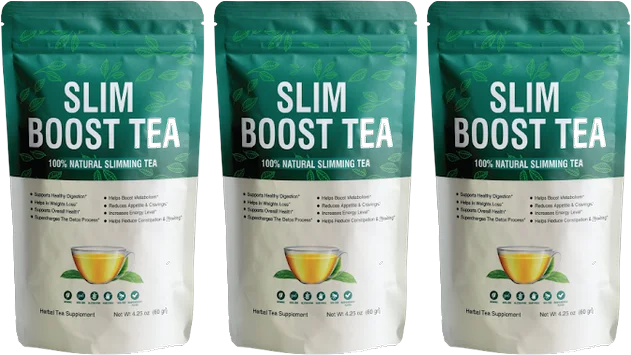
Slim Boost Tea ingredients are 14 herbs and a lemon and mint flavor, printed on the vendor's sales page with no amount for any of them[1]. The list mixes two caffeine sources, a stimulant laxative (senna leaf), licorice root and a sweetener. Of the 14, the best human evidence for weight is garcinia cambogia, which averaged 1.34 kg of loss across 8 trials[5].
Slim Boost Tea ingredients at a glance
Every herb in Slim Boost Tea has an undisclosed amount, and none earns better than a limited grade for the use the vendor claims. Grades come from our evidence cards; "not graded" means we have not yet researched that herb for this blend.
| Ingredient (as printed) | Role the vendor claims | Amount disclosed? | Evidence grade |
|---|---|---|---|
| Costa Rican green tea | Metabolism, fat cells | No | Not graded |
| Wuyi oolong tea | Fat burning | No | Weak |
| Kerala garcinia cambogia | Appetite | No | Weak; avoid with liver disease |
| Indonesian lemongrass | Water weight, digestion | No | Not graded |
| European dandelion leaves | Fat production, detox | No | Weak |
| Korean ginseng root | Energy, fat absorption | No | Not graded |
| Indian senna leaves | "Flushes out toxins" | No | Avoid for weight loss |
| Licorice root | Fat burning hormones | No | Avoid in high blood pressure; weak otherwise |
| Peppermint | Digestion, fatigue | No | Weak |
| Mediterranean orange peel | Fullness | No | Not graded |
| Ginger | BMR, sugar cravings | No | Limited |
| Fennel fruit | Appetite, digestion | No | Weak |
| Monk fruit | Zero-calorie sweetener | No | Weak |
| Ceylon cinnamon bark | Blood sugar | No | Limited |
| Natural lemon and mint flavor | Flavor | No | Not applicable |
What is in each ingredient, and what does research say?
Each herb below has at most small human trials, run at known doses in capsules or extracts. Because the tea gives no amounts, none of those doses can be matched to a cup.
Green tea
Leaves of Camellia sinensis, with caffeine and catechins. NCCIH says these "may have a modest effect on body weight"[3]. Liver injury reports involve concentrated extracts in pills, not brewed tea. We have not graded it for this blend.
Wuyi oolong tea
The same plant, partly fermented. In 12 men, tea from 15 g of leaf a day raised 24 hour energy use by 2.9%, while caffeine alone gave 3.4%[4]. No weight loss trial was found. Grade: weak.
Garcinia cambogia
A fruit rind rich in hydroxycitric acid (HCA). Eight trials found 1.34 kg less weight on average[5], at 1,000 to 2,800 mg HCA a day[6]. Four women had acute liver failure while taking it for weight loss[7]. Grade: weak.
Lemongrass
A citrus-scented grass used in teas. The vendor says it "helps reduce water weight." We have no evidence card for it, so it is not graded.
Dandelion leaf
A 17-person pilot with no placebo found more urination after a leaf extract[8]. A 2026 study of dandelion root found no diuretic effect beyond water[9]. Grade: weak.
Korean ginseng root
Panax ginseng, sold for energy. The vendor says it "inhibits fat absorption." Not graded for this blend.
Senna leaf
A stimulant laxative. Its only human trial used 1.0 g a day for 28 days in constipation[10]. No weight trial exists. MedlinePlus warns that regular use can make bowels depend on laxatives[11]. Grade: avoid for weight loss.
Licorice root
Whole licorice root can contain glycyrrhizin, and the vendor does not say which form it uses. Regular glycyrrhizin intake raises blood pressure and lowers potassium[13]. NCCIH advises caution in high blood pressure, heart or kidney disease and pregnancy[12].
Peppermint
NCCIH says there is very little research on peppermint leaf and not enough to show it helps any condition[14]. Grade: weak.
Orange peel
Dried citrus rind for flavor. The vendor says it "promotes fulness." Not graded.
Ginger
Fourteen trials in 473 overweight adults found a borderline weight drop and no BMI change[15]. Grade: limited.
Fennel fruit
Fennel's trials are for period pain and infant colic, and they are small with likely publication bias[16]. It contains estragole, which researchers flag for regular use[17]. Grade: weak for anything else.
Monk fruit
A sweetener. In 30 men it matched sugar, aspartame and stevia on 3 hour glucose, and the calories saved were eaten later[18]. Grade: weak.
Ceylon cinnamon bark
An extract at 250 or 500 mg a day lowered HbA1c in 210 adults with type 2 diabetes[19]. A 6 g dose had no effect on post-meal glucose in people with impaired glucose tolerance[20]. Grade: limited.
How transparent is the Slim Boost Tea formula?
The formula is not transparent: there is no Supplement Facts panel, no total weight per bag, no bag count per pouch and no serving size[1]. Normally a proprietary blend gives one total, which lets you work out the most any single herb could be. Slim Boost Tea gives no total, so even that ceiling is missing.
Three unknowns matter most:
- Sennosides per cup, the active part of senna
- Caffeine per cup from the green and oolong tea
- Whether the licorice is whole root or glycyrrhizin-free (DGL)
If a third-party site or reseller lists a different recipe, the vendor's own list wins. Note that HeyTea, the bubble-tea chain, sells an unrelated drink also called Slim Boost; its ingredients are not these. Our Slim Boost Tea and HeyTea page separates the two. This list was read on October 27, 2026, and the vendor can change it.
Ingredient safety and interactions
Senna and licorice carry the clearest risks, and both grow with the 3 to 4 cups a day the vendor's refund page asks for[2].
- Senna adds to other laxatives and to potassium-lowering water pills, and low potassium raises digoxin risk[22].
- Licorice can conflict with diuretics, digoxin, corticosteroids and blood pressure drugs[12].
- Senna and garcinia are both among the herbs most often named in herb-induced liver injury reports[21].
- Green and oolong tea add caffeine to coffee and other stimulants.
See a doctor right away if you get yellow skin or eyes, dark urine, ongoing diarrhea, muscle cramps or a racing heartbeat. Our Slim Boost Tea for belly fat page explains why senna's effect on the scale is water and stool.
Do these ingredients prove Slim Boost Tea works?
No. Single-herb trials at known doses cannot prove that a tea with unknown doses works, and no trial of the tea itself exists. The strongest result in the list, garcinia's 1.34 kg average, came from capsules with at least 1,000 mg of HCA a day[6].
We set out each claim beside its evidence on does Slim Boost Tea really work. If you still want to try it, check the current price and the refund terms first.
Back to the Slim Boost Tea overview.
Frequently asked questions
Does Slim Boost Tea contain senna?
Yes. Indian senna leaves are on the vendor ingredient list. Senna is a stimulant laxative, and the amount per cup is not disclosed. MedlinePlus advises against using senna for more than 1 week without talking to a doctor.
Does Slim Boost Tea have caffeine in it?
Yes. Costa Rican green tea and Wuyi oolong tea both contain caffeine. The vendor does not state how much is in a cup, so it adds an unknown amount to any coffee or energy drinks you also have.
Are Slim Boost Tea ingredients the same as the HeyTea Slim Boost drink?
No. HeyTea, the bubble-tea chain, sells an unrelated drink also called Slim Boost. The 14-herb list on this page belongs to the pouch tea sold at tryslimboosttea.com, not to any HeyTea menu item.
What sweetener is in Slim Boost Tea?
Monk fruit, listed by the vendor as a zero-calorie natural sweetener, plus a natural lemon and mint flavor. In a test of 30 men, a monk fruit drink did not lower glucose compared with sugar, stevia or aspartame.
Is the licorice in Slim Boost Tea safe with high blood pressure?
The vendor does not say whether the licorice root contains glycyrrhizin. Regular glycyrrhizin intake raises blood pressure and lowers potassium, and NCCIH advises caution with high blood pressure. Ask your doctor before drinking it.
Sources
- Slim Boost Tea sales page. Abundance Avenue FZ LLC, read October 27, 2026.
- Refund Policy. Slim Boost Tea, read October 27, 2026.
- Green Tea. NCCIH, read October 27, 2026.
- Oolong tea and 24-hour energy expenditure in men (PMID 11694607). PubMed, read October 27, 2026.
- Garcinia cambogia and weight: dose-response meta-analysis of 8 RCTs (PMID 32951714). PubMed, read October 27, 2026.
- Dietary Supplements for Weight Loss, Health Professional Fact Sheet (archived copy). NIH Office of Dietary Supplements, read October 27, 2026.
- Acute liver failure in women taking garcinia cambogia (PMID 29802521). PubMed, read October 27, 2026.
- Diuretic effect of dandelion leaf extract, pilot study (PMID 19678785). PubMed, read October 27, 2026.
- Dandelion root and diuresis in active young adults (PMID 42398668). PubMed, read October 27, 2026.
- Senna for chronic constipation, randomized placebo-controlled trial (PMID 32969946). PubMed, read October 27, 2026.
- Senna. MedlinePlus, U.S. National Library of Medicine, read October 27, 2026.
- Licorice Root. NCCIH, read October 27, 2026.
- Licorice intake and blood pressure: meta-analysis (PMID 28660884). PubMed, read October 27, 2026.
- Peppermint Oil. NCCIH, read October 27, 2026.
- Ginger and obesity measures: meta-analysis of 14 RCTs (PMID 29393665). PubMed, read October 27, 2026.
- Fennel for primary dysmenorrhea: meta-analysis of 12 RCTs (PMID 33182553). PubMed, read October 27, 2026.
- Estragole in fennel preparations, margin-of-exposure assessment (PMID 24384409). PubMed, read October 27, 2026.
- Monk fruit, stevia, aspartame and sucrose drinks: glucose, insulin and energy intake (PMID 27956737). PubMed, read October 27, 2026.
- Ceylon cinnamon extract in type 2 diabetes, RCT of 210 adults (PMID 41412108). PubMed, read October 27, 2026.
- Ceylon cinnamon and post-meal glucose in impaired glucose tolerance (PMID 21929834). PubMed, read October 27, 2026.
- Herbs most often reported in herb-induced liver injury, meta-analysis (PMID 34307603). PubMed, read October 27, 2026.
- Senna drug interactions, including tacrolimus and digoxin (PMID 38657592). PubMed, read October 27, 2026.
This page is general information, not medical advice. Dietary supplements are not reviewed by the FDA for safety or effectiveness before they are sold and are not intended to diagnose, treat, cure or prevent any disease. Talk to your doctor before taking any supplement, especially if you are pregnant, nursing, take medication or have a health condition.